

October 25, 2026 · 2 min read
Does a Campus SIAKAD Have to Be Expensive? Or a Subscription?
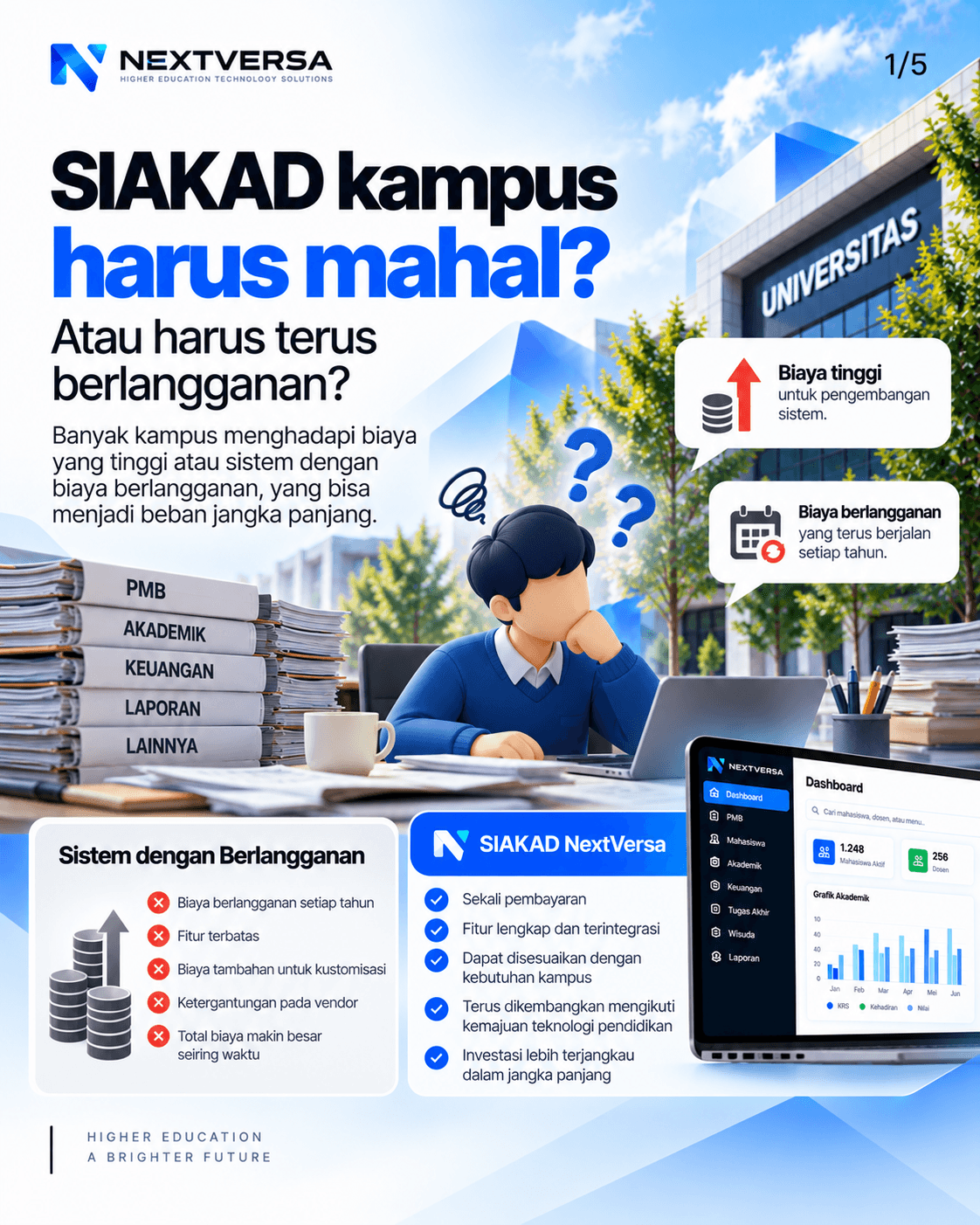
When choosing an academic information system, campuses often face two burdens: a high upfront cost, or a subscription that keeps running every year. Either can weigh on a campus budget for years. This article looks at how to read the full cost of a SIAKAD, and the one-time payment model we offer.
1 / 5
Two cost burdens campuses often face
Many campuses run into two kinds of academic system cost. The first is a high cost to develop or implement the system. The second is a subscription fee that keeps running every year.
With subscription systems, campuses often meet the same pattern: fees are paid every year, features are limited to the plan taken, customization costs extra, the campus becomes dependent on the vendor, and total cost tends to grow over time.
Look at total cost, not just the upfront price
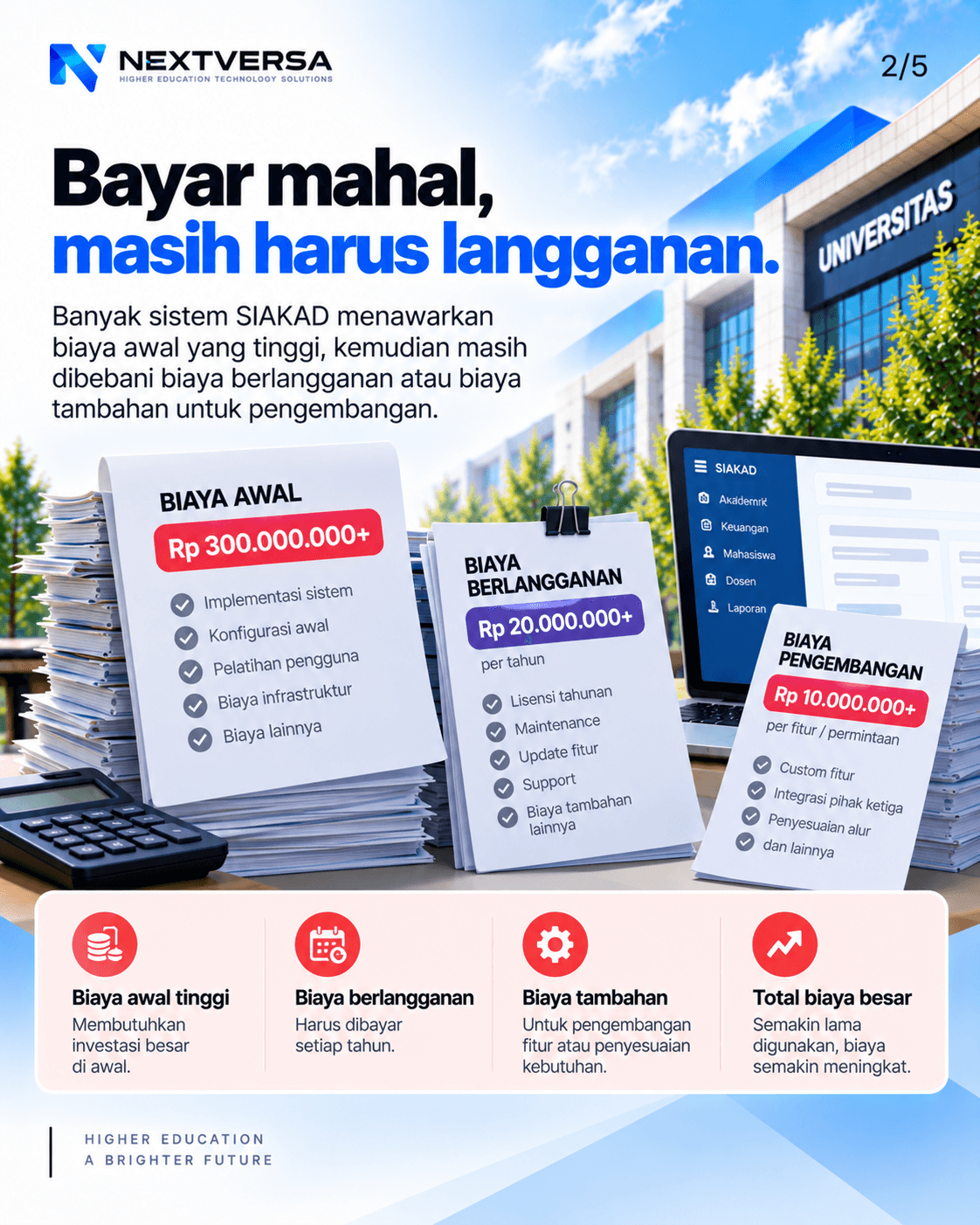
When comparing SIAKAD providers, read the cost in three groups. Upfront costs usually cover system implementation, initial configuration, user training, and infrastructure. Recurring costs can include annual licenses, maintenance, feature updates, and support. Development costs appear when a campus needs custom features, third-party integrations, or workflow adjustments.
Three simple questions help: what is already included in the upfront cost, what is billed repeatedly each period, and what each new feature or adjustment request costs. The answers show the real cost after a few years, not only the number on the first quote.
NEXTVERSA's SIAKAD: one price, paid once
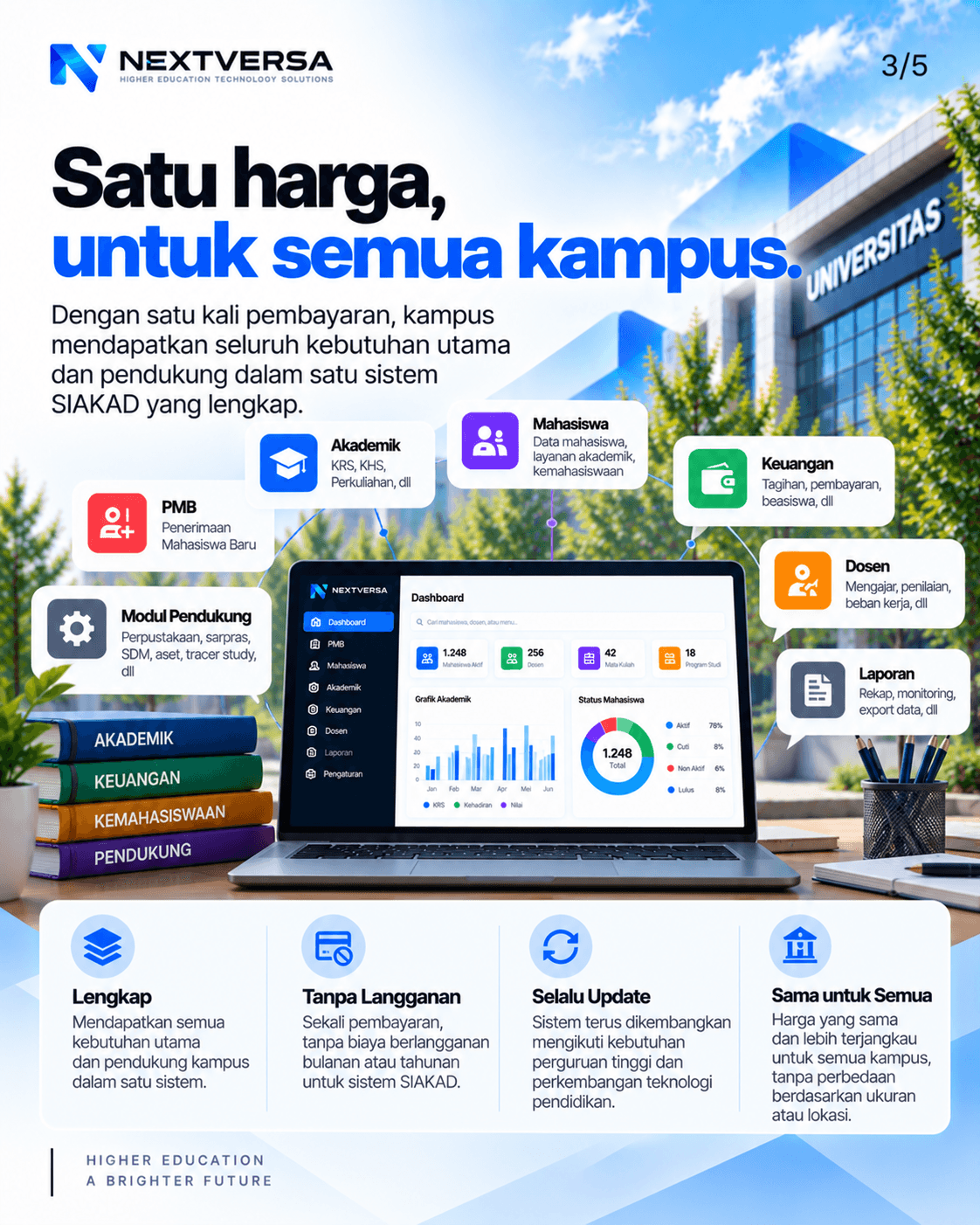
NEXTVERSA's SIAKAD is offered as a single payment, with no monthly or yearly subscription fee for the SIAKAD system. The price is the same for every campus, regardless of size or location.
With that one payment, a campus gets its core and supporting needs in one system: admissions, academics (KRS, results, courses), student records and services, a lecturer portal, finance (billing and payments), and reporting, including recaps, data export, and PDDikti Neo Feeder synchronization. Supporting modules such as HR and staffing, LP2M, and quality assurance (P2M) are also included.
Needs beyond the standard system, such as special integrations, are discussed separately based on the campus's requirements.
A system that keeps evolving
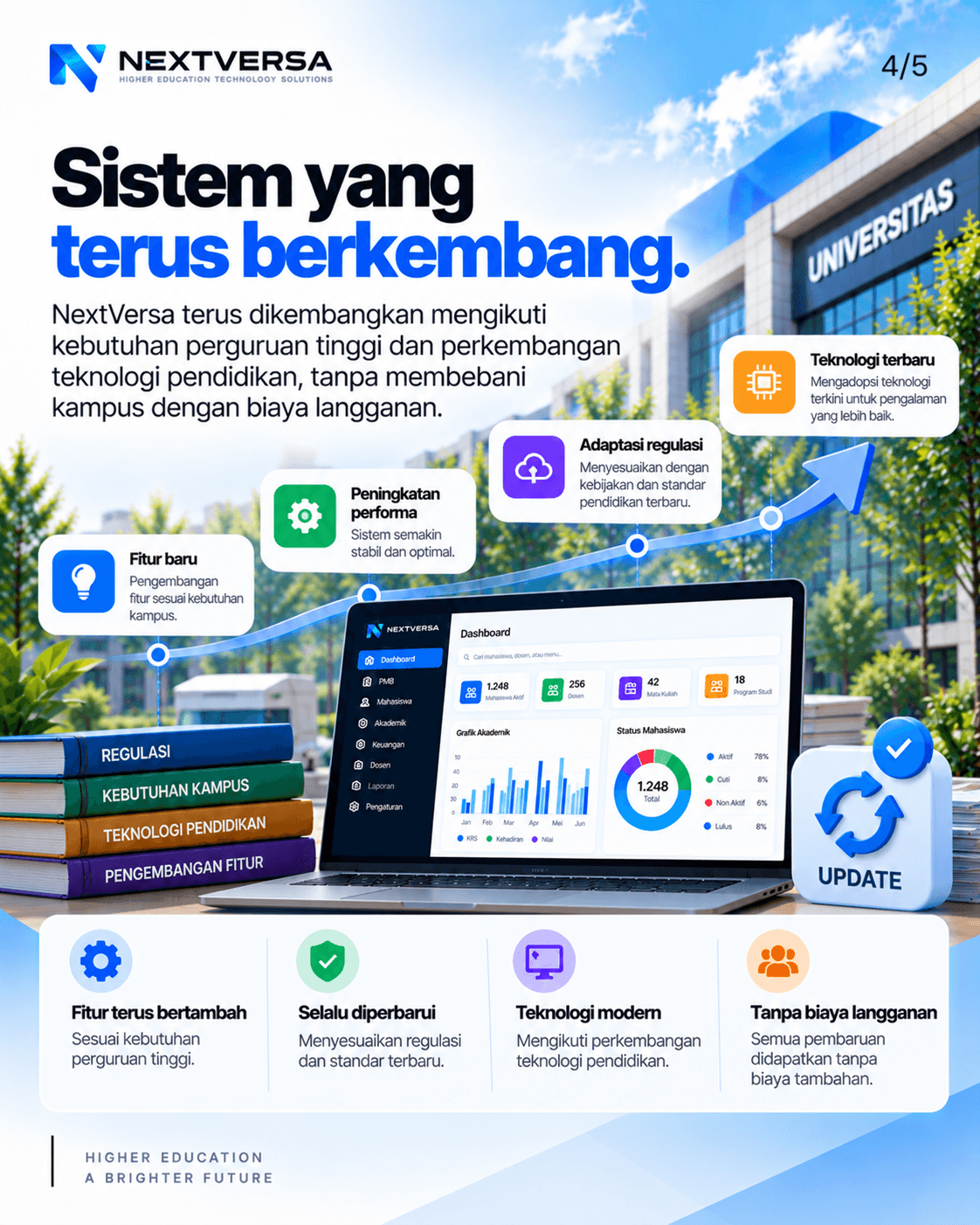
NEXTVERSA's SIAKAD keeps being developed in line with what universities need and with advances in education technology: new features driven by campus needs, performance improvements, alignment with education policy and standards, and newer technology.
Those updates come without a subscription fee, so a campus doesn't have to add to its yearly budget just to keep a current system.
Invest once, for the long term
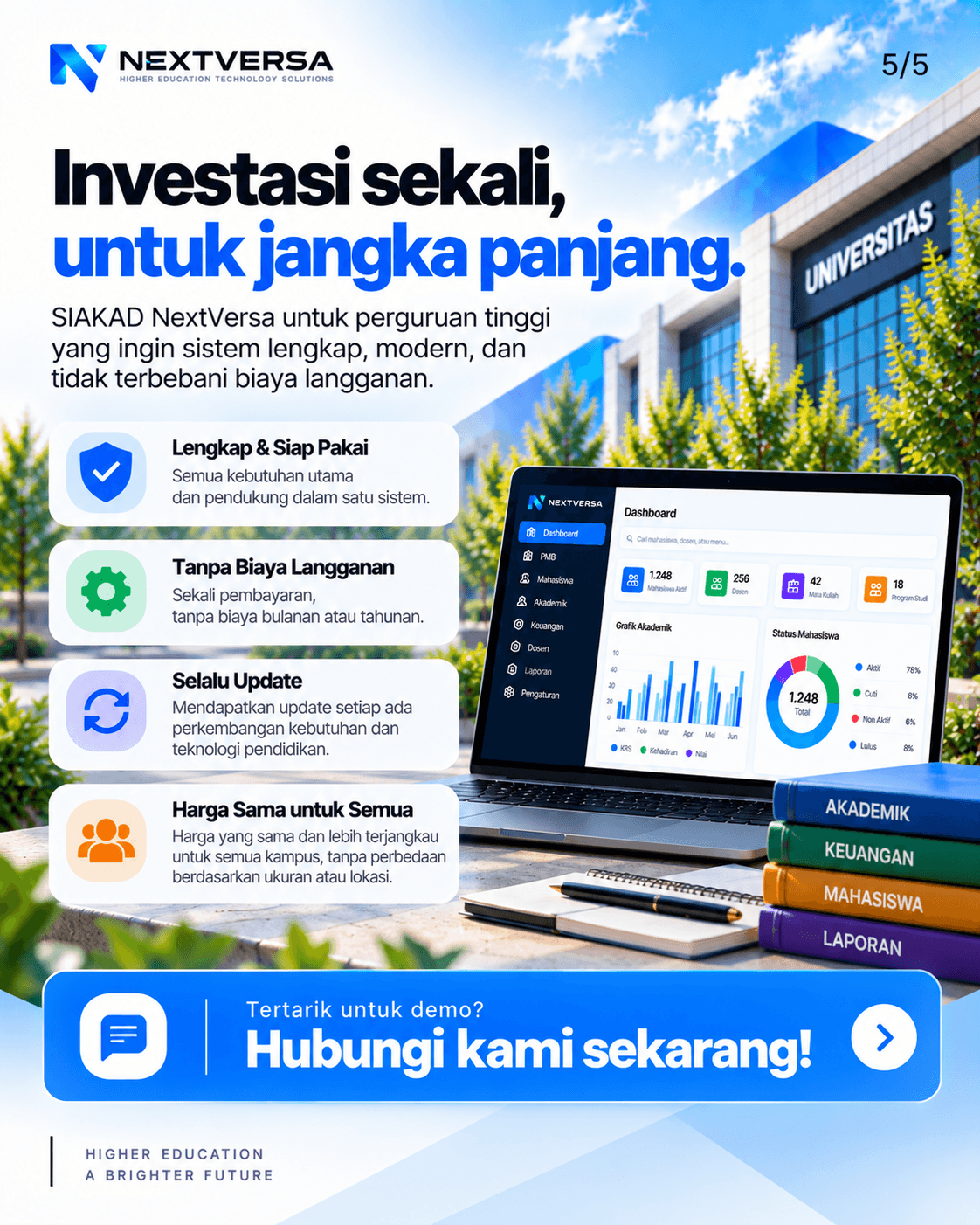
In short, NEXTVERSA's SIAKAD is for universities that want a complete, modern system without a subscription burden: complete and ready to use, no subscription fee, always updated, and the same price for every campus.
Interested in seeing it? Contact us for a demo and pricing information tailored to your campus.
Keep reading
- Building Technology Equality for Indonesian Higher EducationNextVersa provides an integrated campus software ecosystem to ensure technology equality and enhance education quality across Indonesian universities.
- From Admissions to Graduation in One SIAKADFrom admissions, KRS, courses, grades, and theses to graduation review: how NEXTVERSA's SIAKAD connects the whole student academic journey.
- Meet SIAKAD by NEXTVERSA for UniversitiesMeet NEXTVERSA's SIAKAD: an academic information system for universities covering admissions, KRS, grades, theses, finance, and PDDikti reporting.
- Technology for Higher Education: Six Pillars of the Digital Campus EcosystemA digital campus rests on six things: academic systems, admissions, OBE, portals, system integration, and data. Here is how NEXTVERSA sees them.
Get started
It's Time for Campuses to Have Better Technology.
Start discussing your university's digital needs with NEXTVERSA.
A first message that helps us
- 01The university's name and number of students
- 02The systems you use today
- 03The modules that matter most